Jun 29 2011
Rajit Gadh
Professor at the Henry Samueli School of Engineering and Applied Science at UCLA
 Dr. Rajit Gadh is a Professor at the Henry Samueli School of Engineering and Applied Science at UCLA, and he is Founder and Director of the Wireless Internet for Mobile Enterprise Consortium of which major companies including Computer Associates, EDS, Ericsson, HP, Intel, Northrop Grumman and Siemens, are supporting members.
He works in the areas of RFID-middleware, RFID-sensor interface definitions, and, wireless internet technologies for enterprise applications.
“I believe that Wi-Fi and ‘next generation’ technologies will help us bridge the digital divide.”
The holder of a Doctorate degree from Carnegie Mellon University, a Masters from Cornell University and a Bachelors degree from IIT Kanpur he has also taught as a visiting researcher at UC Berkeley. His industrial background started prior to his academic career, when he worked as an engineer and a technology lead for two software startup companies over a period of 4 years (Formtek Inc. and Carnegie Group Inc.). He has won several awards from NSF (CAREER award, Research Initiation Award, NSF-Lucent Industry Ecology Award, GOAL-I award), SAE (Ralph Teetor award), IEEE (second best paper, WTS), etc., and other accolades in his career.[/expand]
Drawing on his expertise and experience Dr Rajit Gadh offers his audiences insights into developing thought leadership in this newly emerging and rapidly changing world.[/expand]
An inspirational and truly professional speaker Dr Rajit Gadh is in great demand as a keynote speaker at various conferences around the world.[/expand]
Continue Reading »
Comments Off on Rajit Gadh
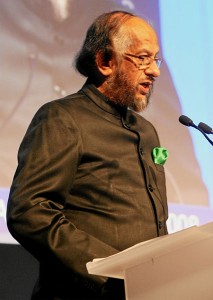 Dr. Rajendra K. Pachauri is an economist and environmental scientist of immense repute who has served as the chair of the Intergovernmental Panel on Climate Change (IPCC) since 2002. Pachauri is also the director general of the The Energy and Resources Institute in New Delhi, an institution devoted to researching and promoting sustainable development. In 2007, he received the shared Nobel Peace Prize on behalf of the IPCC (together with Al Gore).
 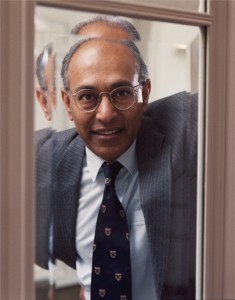 Professor Prabhu Guptara is one of the leading experts on executive development, being the Head of Wolfsberg Executive Development Centre. He is visiting professor at the most prestigious universities, such as Harvard, the University of Fribourg, Switzerland and business schools around the world and is Chairman of the Career Innovation Group. He writes frequently for the Financial Times, The Guardian, and The Times.
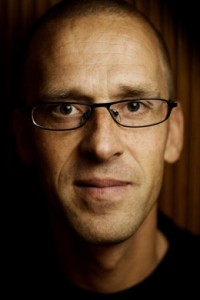 Fredrik Härén is a Swedish entrepreneur, publisher and author who has quickly become one of the most talked-about names in the field of creativity. Now living in Singapore, he is the founder of creativity company interesting.org. He was awarded “Speaker of the Year” in Sweden in 2007, and was selected as one of “Sweden’s 100 most inspiring people” by the magazine Leva in 2008. In 2009 he was selected one of “Sweden’s most sought after business speakers”. Great speakers change people’s lives and this is exactly what Fredrik Härén does.
 A Silicon Valley icon and philanthropist for more than thirty years, Steve Wozniak has helped shape the computing industry with his design of Apple’s first line of products the Apple I and II and influenced the popular Macintosh. The Apple II eventually became one of the best selling personal computers of the 1970s and early 1980s. In February 2009 Steve Wozniak joined Fusion-io, a data storage and server company, in the USA as their chief scientist.
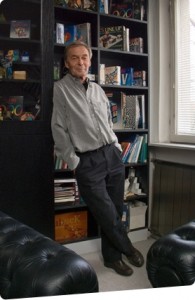 Prof. Ernő Rubik is best known for the invention of mechanical puzzles including Rubik’s Cube, Rubik’s Magic, Rubik’s Magic: Master Edition, Rubik’s Snake and Rubik’s 360. He is a member of the USA Science and Engineering Festival’s Advisory Board and co-founder and managing director of A&D Studio Ltd. and co-founder of the Palace of Miracles (scientific playhouse), Budapest. Currently, he is mainly working on video game development and architectural topics and is still leading the Rubik Studios.
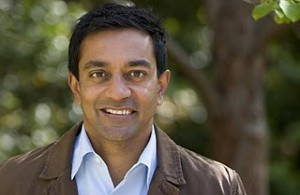 Dr. M. Sanjayan is the lead scientist for The Nature Conservancy, where he specializes in human well-being and conservation, Africa, wildlife ecology, and media outreach and public speaking on conservation issues. He is a Catto Fellow with the Aspen Institute and is a frequent guest on NBC’s Today Show and has also appeared on the Late Show with David Letterman where he discussed global climate change and the future of the planet. He is a program advisor for the Clinton Global Initiative.
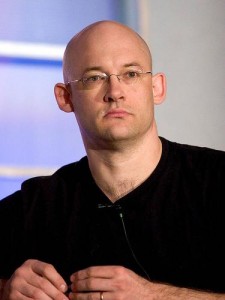 Prof. Clay Shirky is a best-selling author, prolific writer, educator and consultant on the social and economic effects of Internet technologies. Adjunct professor in New York University’s graduate Interactive Telecommunications Program, he believes that new technologies enabling loose collaboration — and taking advantage of “spare” brainpower — will change the way society works. He discusses the effect of Facebook, Twitter and other social media in the recent uprisings in Egypt and Tunisia, and what it could mean for the Middle East at large.
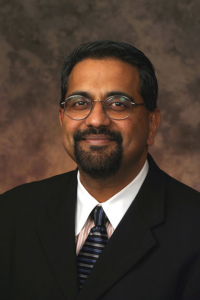 Krish Dhanam is a recognized expert in the field of human engineering and human development. He is the author of ‘The American Dream from an Indian Heart’ and contributing author to ‘Top Performance’ written by Zig Ziglar. His client list is the who’s who of global enterprise and he has received accolades from some of the most distinguished organizations including, The United States Army, Christian Dior, etc. His current assignments include functioning as Vice President of Consulting and Business Development for Ziglar True Performance and Co-founder of Krish Dhanam Training International.
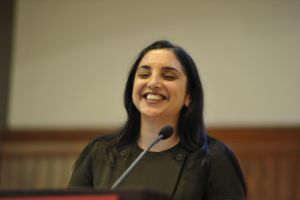 Sheena Iyengar is a business professor at Columbia University and a leading expert on decision making who studies how people choose (and what makes us think we’re good at it). Being blind has not stopped her from expertly exploring topics such as why choice is powerful and where its power comes from, the ways in which people make choices, the relationship between how we choose and who we are, why we are so often disappointed by our choices, how much control we really have over our everyday choices, how we choose when our options are practically unlimited, whether we should ever let others choose for us, and if so, whom and why.